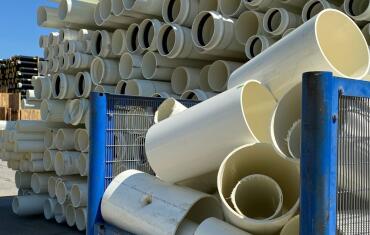
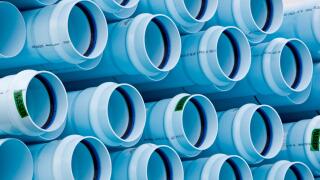

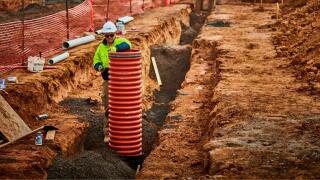
PVC pipes and fittings are one of the most widely used pipeline systems in Australian construction, infrastructure and utilities. This guide covers the main PVC pipe types, manufacturing standards, pressure ratings, fittings and applications, drawing on decades of PVC pipeline manufacturing experience at Iplex.
What is PVC Pipe?
PVC (polyvinyl chloride) is a plastic used across pipeline systems because it's durable, chemically resistant, cost-effective and holds up over a long service life. In Australia, PVC pipe falls into three main categories: PVC-U (unplasticised), PVC-M (modified) and PVC-O (oriented). Each has a different balance of strength, flexibility and cost, and we've broken each one down below.
PVC pipe is manufactured to strict Australian Standards and covers both pressure and non-pressure applications, from water mains to stormwater drainage. It's also recognised as a sustainable building material, with a long service life and a low-carbon manufacturing footprint relative to alternatives like ductile iron or concrete.
Types of PVC Pipe - PVC-U, PVC-M and PVC-O Explained
PVC-U Pipe (Unplasticised PVC)
PVC-U is the most common form of PVC pipe used in Australia. It's rigid, strong and chemically resistant, which makes it a reliable choice for:
- Pressure water supply
- Drainage
- Stormwater
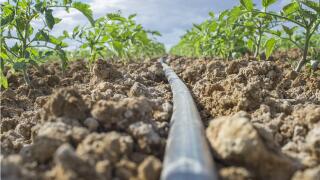
- Irrigation systems
PVC-U pipe is manufactured to AS/NZS 1477 for pressure applications and AS/NZS 1260 for non-pressure and DWV applications. Explore Iplex's PVC-U range for product specifications.
PVC-M Pipe (Modified PVC)
PVC-M has better impact resistance than PVC-U and achieves the same pressure rating at a lighter wall thickness. That makes it a common choice for water reticulation, pressure mains and civil infrastructure projects where impact resistance during installation matters. PVC-M is manufactured to AS/NZS 4765. See Iplex's PVC-M range for more detail.
PVC-O Pipe (Oriented PVC)
PVC-O is the highest-performing PVC pipe type available. The manufacturing process molecularly orients the material, which delivers superior strength, fatigue resistance and flow efficiency compared to PVC-U and PVC-M. It's increasingly specified for pressure mains, potable water and recycled water infrastructure. PVC-O is manufactured to AS/NZS 4441. Browse Iplex's PVC-O range for technical data.
PVC Pressure Pipe vs Non-Pressure Pipe - What's the Difference?
The distinction comes down to how each pipe handles internal pressure.
PVC pressure pipe is engineered to carry fluid under sustained pressure — think water mains, rising mains and irrigation systems. It's rated to a specific pressure class, and in Australia these typically run from PN6 through to PN20. The right class depends on your system's design pressure and the application it's serving.
PVC non-pressure pipe — also called gravity pipe — relies on gravity flow rather than pressure. It's used in drainage, waste, vent (DWV), stormwater and sewer applications, where fluid moves through the system under its own weight rather than being pumped.
Both categories are manufactured to the relevant Australian Standards, so the choice between them comes down to what your system needs to do, not product quality.
Electrical Conduit Pipe - PVC in Electrical Applications
PVC electrical conduit — also known as electrical pipe PVC — protects wiring and cabling across residential, commercial and industrial construction. It comes in a few different forms depending on the job:
- Heavy duty — for underground and high-impact installations
- Medium duty — for general in-slab and surface-mounted use
- Flexible — for runs that need to navigate tight spaces or obstacles
Iplex's PVC conduit range is manufactured to AS/NZS 2053. Its non-conductivity, chemical resistance and ease of installation make it the standard choice over metal conduit in most modern electrical work. Explore Iplex's electrical conduit range for product options.
PVC Pipe Parts & Fittings - A Complete Overview
Fittings are the connective components of any PVC pipeline system. They handle directional changes, branching, terminations and transitions between pipe sections — without them, a pipeline is just a collection of straight sections with nowhere to go.
Common PVC Fittings include, but are not limited to:
- Elbows (45° and 90°)
- Tees and junctions
- Reducers and couplings
- End caps and plugs
- Saddles and flanges
- Inspection openings
- Threaded adapters
PVC pipe parts and fittings are joined using one of three methods: solvent cement welding, rubber ring joint (RRJ) or push-fit connections. Solvent cement welding is common for smaller-diameter and non-pressure systems, while RRJ is typically used for larger pressure pipelines where some flexibility at the joint is useful.
Common Applications for PVC Pipes & Fittings
Water Supply & Reticulation
Potable water mains, residential supply, and rural and agricultural reticulation. See Iplex's Plumbing markets page for related systems.
Drainage, Waste & Vent (DWV)
Above-ground and below-ground residential and commercial drainage, along with sewer and stormwater systems.
Irrigation
Agricultural, commercial and sporting field irrigation, typically using PVC pressure pipe.
Civil & Infrastructure
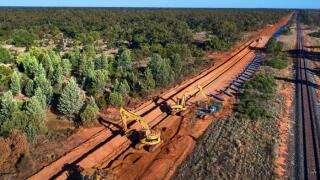
Pressure mains, culverts, road crossings and municipal water infrastructure.
Electrical & Telecommunications
Conduit for electrical wiring, data cabling and underground services.
PVC pipe and fittings show up across nearly every sector Iplex serves. Explore Iplex Industries for a full breakdown by market.
Australian Standards for PVC Pipe - What You Need to Know
Compliance with Australian Standards ensures product quality, system safety and eligibility for project specification. The key standards for PVC pipe are:
|
Standard |
Application |
|
AS/NZS 1477 |
PVC-U pressure pipes and fittings |
|
AS/NZS 1260 |
PVC-U DWV pipes and fittings |
|
AS/NZS 4765 |
PVC-M pipes |
|
AS/NZS 4441 |
PVC-O pipes |
|
AS/NZS 2053 |
Conduit for electrical installations |
All Iplex PVC products are manufactured to the relevant Australian and New Zealand Standards. For full technical specifications, visit Iplex's technical resources and BEP PVC pages.
Why Choose Iplex for PVC Pipes & Fittings?
Iplex manufactures PVC pipeline systems across Australia, with a product range that spans PVC-U, PVC-M, PVC-O, electrical conduit and the fittings that connect them. Manufacturing locally means shorter lead times and consistent supply for projects nationwide, backed by technical support for specification and design queries.
Iplex's PVC products are also part of the Pipeback recycling program — see the Environment & Sustainability page for details on how PVC pipe fits into a circular manufacturing model.
If you're specifying PVC pipe for an upcoming project, contact Iplex or explore the category pages linked throughout this guide for full product ranges and technical data.
Frequently Asked Questions - PVC Pipes & Fittings
What is the difference between PVC-U, PVC-M and PVC-O pipe?
PVC-U is the standard rigid PVC pipe used across pressure and non-pressure applications. PVC-M offers better impact resistance at a lighter wall thickness for the same pressure rating. PVC-O is molecularly oriented for the highest strength and fatigue resistance of the three, and is commonly specified for demanding pressure main applications.
What pressure rating do I need for my PVC pipe system?
It depends on your system's design pressure and application. Australian PVC pressure pipe is typically available in classes from PN6 through to PN20 — check your project's engineering specifications or speak with Iplex's technical team to confirm the right class.
Can PVC pipe be used for drinking water supply?
Yes. PVC-U, PVC-M and PVC-O are all used in potable water infrastructure in Australia, provided the product is manufactured and certified to the relevant standard for water supply applications.
What jointing method is used for PVC pressure pipe?
PVC pressure pipe is typically joined using rubber ring joints (RRJ) for larger diameters, or solvent cement welding for smaller-diameter systems. The right method depends on pipe size and the specific system design.
Is PVC pipe recyclable?
Yes. PVC pipe can be recycled at the end of its service life, and Iplex runs the Pipeback program to support this. See the Environment & Sustainability page for more on how the program works.
What Australian Standards apply to PVC pipes and fittings?
The main standards are AS/NZS 1477 (PVC-U pressure), AS/NZS 1260 (PVC-U DWV), AS/NZS 4765 (PVC-M), AS/NZS 4441 (PVC-O) and AS/NZS 2053 (electrical conduit).
Where can I find technical specifications for Iplex PVC products?
Full technical specifications, including pressure ratings, dimensions and standards compliance, are available on Iplex's technical resources pages and individual product category pages.