
Poliplex PE100 Pipe
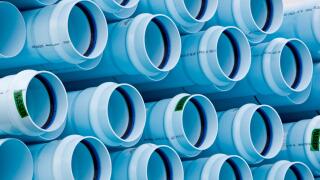
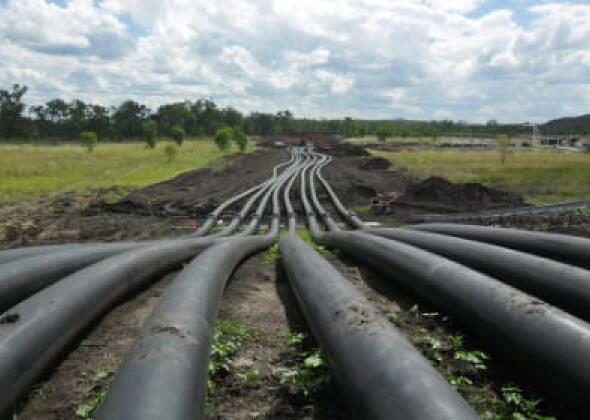
Polyethylene (PE) pipes offer exceptional performance for both above and below ground applications. PE Pipes have a complete range of available fittings and very long asset life. PE pipes have been produced in Australia since the mid 1950’s, whilst initially in smaller diameters for industrial and agricultural applications, PE pipe and fittings are now available in diameters up to 2000mm. Usage of PE pipes across a broad range of industries and applications has grown rapidly since this period and polyethylene resins are evolving from the traditional PE100. The growing demand for higher performance and longer-life PE pipes has driven us to develop a PE pipe system that will provide reliable service for 100 years or more.
Get a great quote on our range of PE pipes and fittings by contacting us below.
Technical Guide
Features & Benefits
Product Details
Certifications & Approvals
Installation & Handling
FAQ
Technical Guide
Poliplex® PE Pipes and Fittings Technical Guide
Iplex Poliplex® PE Pipes and Fittings System - Product Catalogue and Technical Guide
Features & Benefits
Advantages
Poliplex® PE100 HDPE pipe offers strong performance across a range of applications & industries. See below some of the advantages of installing Poliplex® Polyethylene pipes.
Advantage |
Benefit |
| Long-length supply | Fewer joints required, reducing installation time and potential leak points |
| Full axial restraint | Eliminates the need for thrust blocks at bends and fittings |
| Low celerity material | Minimises water hammer risk in pressure pipeline systems |
| Minimises water hammer risk in pressure pipeline systems | Suitable for long-term outdoor exposure in above-ground installations when in plain black |
| Corrosion and rust free | No lining, coating or cathodic protection required |
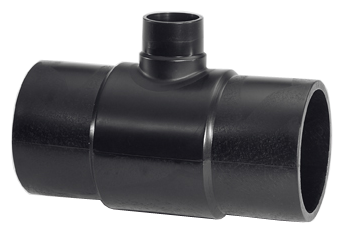
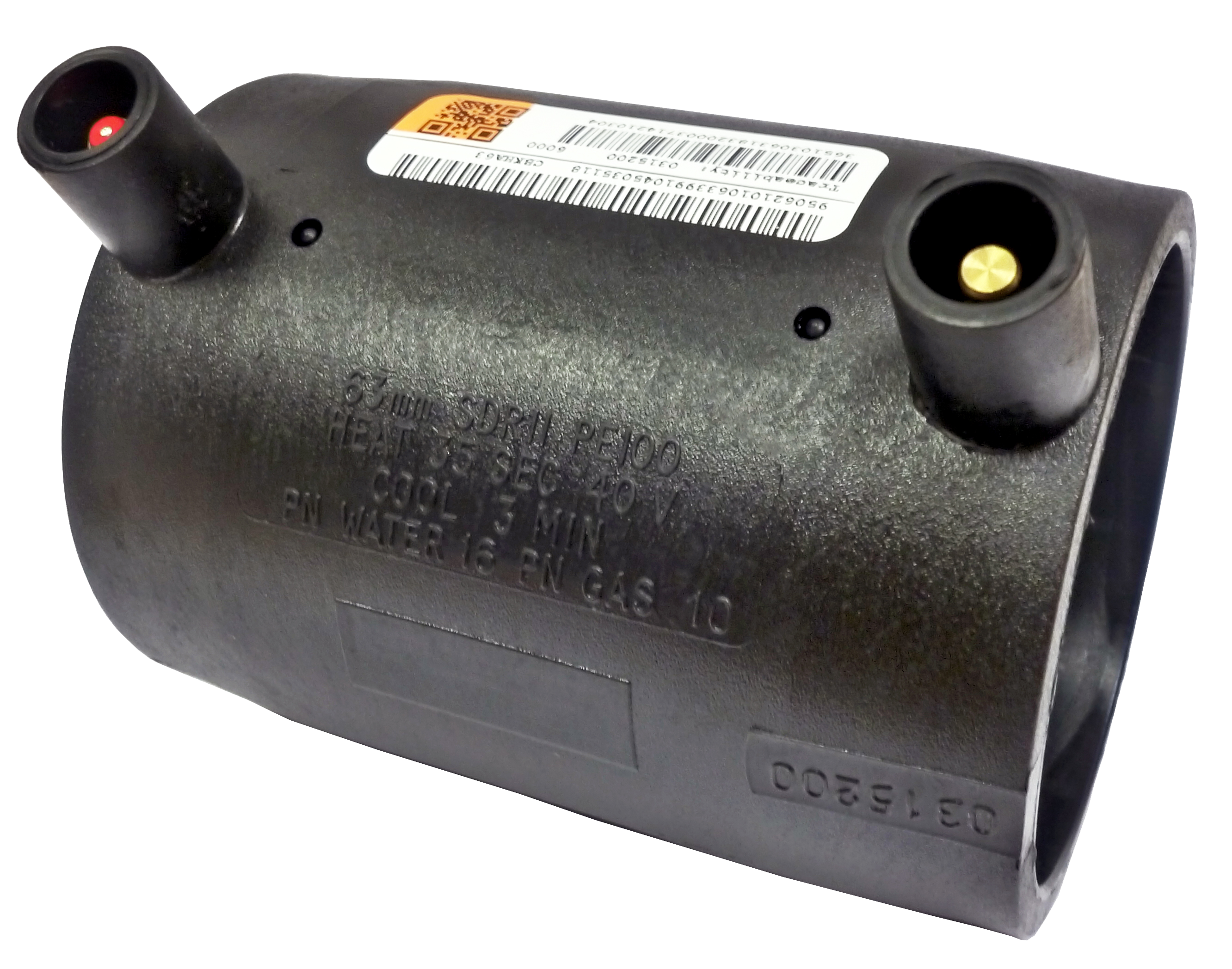
| Complete fittings range | Electrofusion, butt-welded and compression fittings available across the full diameter range |
| Butt and electrofusion weldable | Fully restrained, leak-free jointing compatible with AS/NZS 2033 procedures |
| High ring stiffness | Suitable for deeply buried and high-load applications |
| Excellent abrasion resistance | Ideal for slurry, mining and high-velocity flow applications |
Applications
POLIplex® high pressure polyethylene pipes are used to convey all types of liquids and gases for above and below ground applications including:
Poliplex PE100 Applications |
Description |
| Urban water supply | Potable and recycled water mains and reticulation |
| Gas distribution | Urban and upstream coal seam gas pipelines |
| Mine dewatering | High-pressure slurry and process pipelines |
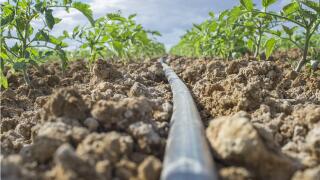
| Irrigation | Agricultural and commercial irrigation supply |
| Sewer systems | Vacuum, pressure and gravity sewer applications |
| Submarine pipelines | Ocean outfalls and submarine crossings |
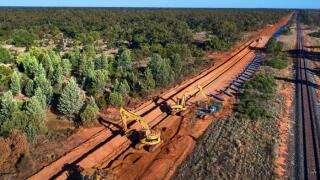
| Trenchless installation | HDD, pipe bursting and sliplining rehabilitation |
| Industrial process | Compressed air, chemical and industrial pipework |
| Electrical & telecommunications | Cable conduit for underground services |
Product Details
POLIplex® Pipe Range and Dimensions
POLIplex® PE100 pipes are available from DN16 – DN2000. To view the full range, refer to the Polyethylene Technical Guide.
Pipe sizes up to DN160 can be supplied in coil lengths of up to 300 metres. Larger diameters are typically 12m long.
Rural Polyethylene Pipe Range and Dimensions
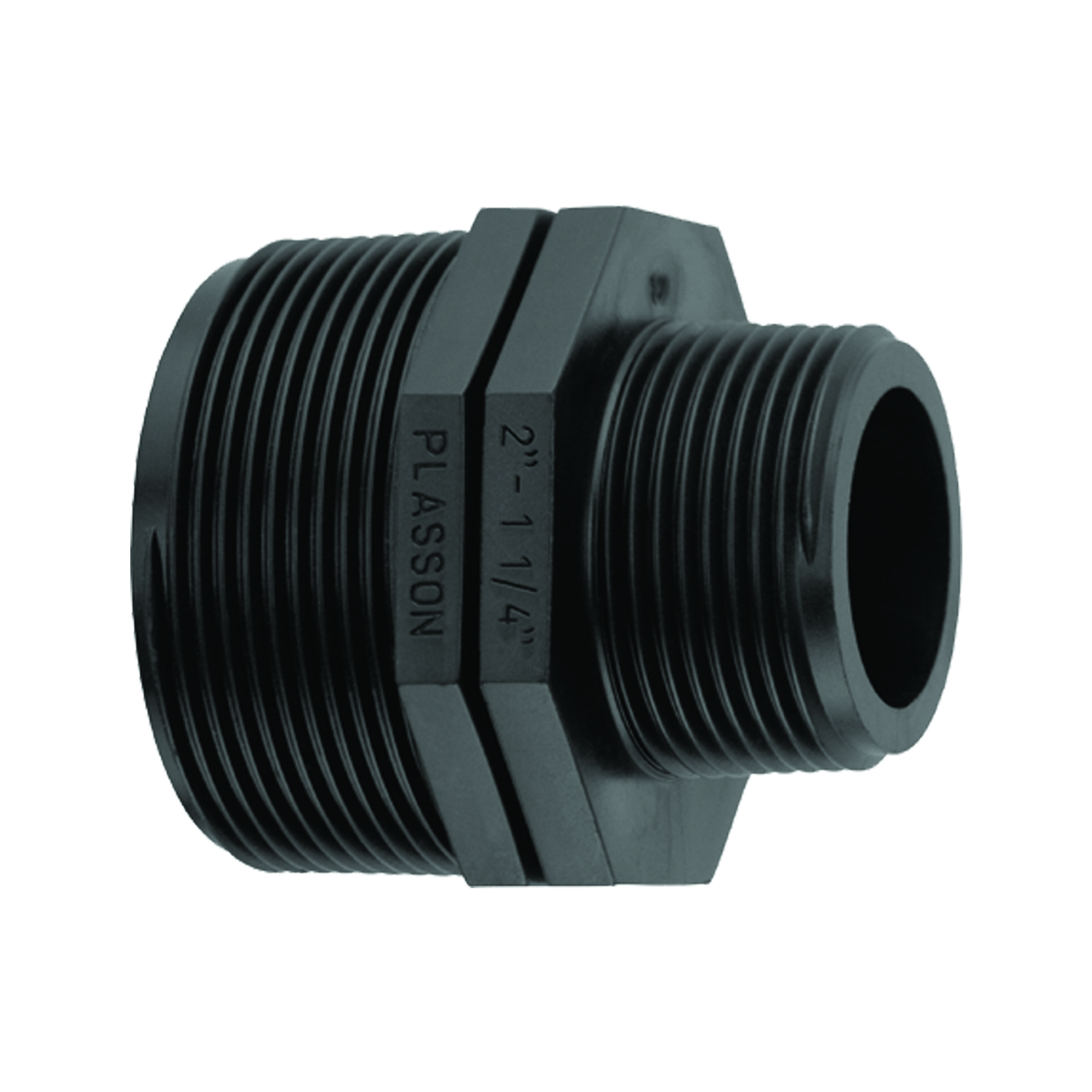
Iplex Greenline rural polyethylene pipe is rated to 800 kPa for use in rural applications. A range of rural compression fittings are available from ¾ inch to 2 inch.
Greenline economy rural pipe dimensions
|
Nominal ID in (mm) (inches) |
ID Ave (mm) |
Wall Ave (mm) |
OD Ave (mm) |
|
20 (3/4”) |
19.0 |
1.6 |
22.2 |
|
25 (1 ) |
25.3 |
1.7 |
28.7 |
|
32 (1 ¼”) |
31.6 |
2.0 |
35.6 |
|
40 (1 ½”) |
38.0 |
2.4 |
42.8 |
|
50 (2”) |
50.9 |
3.2 |
57.3 |
THERMAPIPE® PE100 Pipe
THERMAPIPE® is a co-extruded PE100 pipe with a highly reflective, UV-stabilised white outer jacket layer bonded to a black inner wall. The white layer incorporates Hindered Amine Light Stabilisers (HALS) and titanium dioxide, providing enhanced UV resistance and reduced solar heat absorption compared to conventional black polyethylene pipe.
Testing confirms that solar radiation has a significantly reduced and more predictable effect on THERMAPIPE® in above-ground exposed installations, resulting in lower mean pipe wall temperatures and enabling the use of thinner-walled pipe while maintaining pressure performance. Key advantages over standard black PE pipe in sunlight-exposed installations include:
- Thinner-walled pipe design, reducing material cost and weight
- Lower pumping costs through more efficient pipe selection
- Reduced thermal expansion and contraction, minimising the need for pipeline snaking
- Reduced pipe movement on tailings dam walls and pipe racks
- Lower anchorage loads due to reduced thermal expansion
- Improved collapse resistance under vacuum conditions
- Cooler conveyed fluid temperatures in exposed applications
THERMAPIPE® is manufactured to the performance requirements of AS/NZS 4130 using a white PE100 jacket compound complying with AS/NZS 4131 and PIPA Technical Guideline POP017.
POLIplex® Joining Systems
Poliplex® PE100 HDPE pipe is compatible with a comprehensive range of joining methods to suit different pipe diameters, pressure ratings and installation conditions. All jointing must be performed in accordance with AS/NZS 2033 and relevant PIPA Industry Guidelines.
- Butt-fusion welding - the primary jointing method for larger-diameter installations, producing a continuous, fully-restrained joint. Must be performed by trained and certified operators per PIPA Guideline POP003
- Electrofusion welding - suited to field jointing, confined spaces, saddle connections and repairs. Iplex's EF range includes couplings, elbows, tees, reducers, saddles and transition adaptors. Must be performed by certified operators per PIPA Guideline POP001. View the electrofusion and butt-welded fittings range
- Compression fittings - suitable for DN160 and below, providing a fast, reusable mechanical joint without specialist welding equipment. Compliant with AS/NZS 4129. View the compression fittings range
- Flanged connections - for connections to metallic pipework, valves and pumps. Iplex stub flange adaptors and backing rings are available to AS2129, AS4087 and ASME B16.5 standards
- Mechanical couplings - AVK Supa Plus® and Supa Maxi® couplings provide a flexible non-welded connection option for field repairs and transitions between pipe materials
For full fitting dimensions and product codes, refer to the Poliplex® PE Pipes and Fittings Technical Guide
Mechanical Properties
|
Property |
Value & Unit |
|
Density (Specific Gravity) |
955kg/m3 |
|
Yield Strain |
10% |
|
Yield Stress |
25MPa |
|
Compressive Strength |
32MPa |
|
Tensile Modulus |
900MPa |
|
Hardness Shore D |
63 |
|
Poisson’s Ratio |
0.4 |
|
Ring bending modulus (3 mins) |
950MPa |
|
Ring bending modulus (50 yrs) |
260MPa |
Thermal Properties
|
Property |
Value & Unit |
|
Coefficient of Thermal Expansion |
1.8 x 10⁻⁴/°C |
|
Thermal Conductivity |
0.38W/m.K |
Typical Fire Resistance Properties
|
Property |
Value & Unit |
|
Ignitability |
13 |
|
Smoke Development |
3 |
|
Spread of Flame |
7 |
|
Heat Evolved |
6 |
Temperature Effect On Pressure Rating
The co-efficient thermal linear expansion of polyethylene varies with temperatures, but at ambient temperature lies in the range 1.2 to 2.4 x 10⁻⁴ per degree C. In broad terms, this is about twenty times that of steel and therefore unrestrained pipe will expand or contract much more than the steel structure that may be supporting it.
Should the pipe be fully restrained, the strain due to thermal changes will generate stress in the material. However due to the relatively low tensile deformation modulus of polyethene and assuming a typical ambient temperature fluctuation of less than 40°C, it can be assumed that the safe allowable stress will not be exceeded. Over the longer term, stress relaxation will increase the ability of polyethylene to accommodate high thermal strains.
The conductivity of polyethylene varies with temperature almost linearly and is typically O.47W/m.K at 0°C to 0.37W/m.K at 70°C.
The specific heat of polyethylene varies with temperature from 1800 Joules/kg.K at 0°C to 2200J/kg.K at 60°C.
All temperatures above 25°C - it is necessary to re-rate polyethylene pressure pipe systems. The table below provides guidance as to the maximum operating pressure of PE100 pipes at temperature. It should be noted that at constant temperatures greater than 40°C, the 50-year design life of POLlplex® pipes may be reduced.
Thermal Re-rating of PE100 polyethylene POLIplex® pipe
Maximum allowable operating pressure - PE100 Water pipe (m head)
|
Temp°C |
PN4 |
PN6.3 |
PN8 |
PN10 |
PN12.5 |
PN16 |
PN20 |
PN25 |
|
20 |
40 |
63 |
80 |
100 |
125 |
160 |
200 |
250 |
|
25 |
36 |
58 |
73 |
91 |
115 |
145 |
182 |
227 |
|
30 |
36 |
58 |
73 |
91 |
115 |
145 |
182 |
227 |
|
35 |
33 |
53 |
67 |
83 |
106 |
133 |
167 |
208 |
|
40 |
33 |
53 |
67 |
83 |
106 |
133 |
167 |
208 |
|
45 (35 y)* |
31 |
49 |
62 |
77 |
99 |
123 |
154 |
192 |
|
50 (22 y)* |
29 |
46 |
57 |
71 |
91 |
114 |
143 |
179 |
|
55 (15 y)* |
29 |
46 |
57 |
71 |
91 |
114 |
143 |
179 |
|
60 (7 y)* |
27 |
43 |
53 |
67 |
85 |
107 |
133 |
167 |
|
80 (1 y)* |
20 |
32 |
40 |
50 |
63 |
80 |
100 |
125 |
- The values tabled are for POLlplex® pipe manufactured to AS/NZS 4130 and fittings made from compounds complying with AS/NZS 4131.
- The times given in years as (35y) are allowable extrapolation limits obtained by applying the factors in Table 1 of ISO 9080 to two years of test data at 80°C. Where appropriate specific advice should be obtained from the manufacturer and data provided shall be derived from testing to ISO 9080.
Thermal Expansion and Contraction
The co-efficient thermal linear expansion of polyethylene varies with temperatures, but at ambient temperature lies in the range 1.2 to 2.4 x 10⁻⁴ per degree C. In broad terms, this is about twenty times that of steel and therefore unrestrained pipe will expand or contract much more than the steel structure that may be supporting it.
Should the pipe be fully restrained, the strain due to thermal changes will generate stress in the material. However due to the relatively low tensile deformation modulus of polyethene and assuming a typical ambient temperature fluctuation of less than 40°C, it can be assumed that the safe allowable stress will not be exceeded. Over the longer term, stress relaxation will increase the ability of polyethylene to accommodate high thermal strains.
Flammability
On the application of heat, polyethylene melts at between 120°C and 135°C and will catch fire at 340°C in the presence of name. Combustion is not self supporting if there is less than 17% oxygen present.
Under the appropriate conditions, polyethylene burns in air with a faintly luminous yellow flame to yield carbon dioxide and water. In uncontrolled fire conditions, other compounds can be produced including carton monoxide, aliphatic and aromatic hydrocarbons together with various oxygen containing substances.
Permeability
This property refers to the passage of either liquids or gases through the molecular structure of a material. Polyethylene resin, being hydrophobic, has a low permeability to water vapour, It is also relatively impermeable to gases such as carbon dioxide, ethylene, natural gas, oxygen, methane, air and nitrogen.
It does, however, exhibit significant permeability to some other gases and liquids such as aliphatic, aromatic and chlorinated solvents which are soluble with polyethylene. As a general rule, the larger the vapour molecule or the more dissimilar in chemical structure to polyethylene, the lower the permeability. To calculate the loss of gas from a PE pipe Fick's first law is applicable. This can be written:
Volume of permeating gas (m3) = g ΠDLPT/t
where
g = permeability coefficient (m3 per m.MPa.day)
D = outside of diameter (m)
L = length of pipeline (m)
P = partial pressure (MPa)
T = time (days)
t = thickness (m)
Poisson’s Ration
When any elastic material, including polyethylene, is extended by a longitudinal force it will simultaneously contract in the lateral direction. The ratio of the (smaller) transverse strain to the longitudinal strain is the Poisson's Ratio for the material and ranges from 0.3 for metals to 0.5 for rubber polymers. For PE, a value of 0.4 is accepted for calculation purposes.
Because of the comparatively high circumferential strain in a PE pipe under normal operating pressures, the longitudinal contraction may be significant where there is no restraint. This can occur in above ground installations or where slip liners are not grouted. In these circumstances the pipeline may require anchoring to prevent separation. The ultimate circumferential strength of the pipes will increase slightly when axial contraction is prevented.
Worked Example
Problem: By what amount will a POLIplex® 100 pipeline shorten due to Poisson's effect when operating at class PN head?
Solution:
Circumferential (hoop) strain = Design Stress(MPa)/Long-term Modulus (MPa)
8.0/200 or 4%
Longitudinal = Poisson's Ratio x hoop strain
= 04 x 0.04
= 0.016
or 1.6% of length of pipeline
That is at maximum working head an unrestrained pipeline 100 metres long will shorten 1.6 metres and a 6 metre length joined with a mechanical coupling will contract 96 millimetres.
PE100 Material Composition
The PE100 polyethylene resin used in POLIplex® pipes and fittings are pre-compounded, either black or coloured with pigment, complying with AS/NZS 4131. Anti-oxidants are used to inhibit oxidation of the polymer at the compounding stage and during subsequent processing.
Carbon black is used in all black POLIplex® pipe at a concentration of 2.25 ± 0.25% by mass as an ultra violet radiation absorber.
In natural and coloured POLIplex® materials, hindered amine light stabiliser (HALS), ultra violet absorber is used in lieu of carbon black.
Chemical Resistance
Polyethylene is a polyolefin resin, in chemical terms a non-polar high molecular weight paraffin of the hydrocarbon family. Hence it is very resistant to (non-oxidising) strong acids, strong bases and salts. It is mildly affected by aliphatic solvents although aromatic and chlorinated solvents causing some swelling. Polyethylene is affected by strongly oxidising substances such as halogens and concentrated inorganic acids. POLIplex® pressure pipes should not be used to convey water disinfected with chlorine dioxide at any temperature, which has been found to rapidly deplete the antioxidant additives at elevated temperatures.
Colour and Markings
Iplex POLIplex® PE100 pipes are colour coded as per AS/NZS 4130 to easily distinguish between the different types of pipe applications. POLIplex® pipes can be manufactured all black, with stripes or coex.
POLIplex® PE100 pipe colour identification
|
Product |
Application |
|
POLIplex® PE100 Black |
|
|
POLIplex® PE100 Blueline |
Drinking water |
|
POLIplex® PE100 Purple Stripe |
Recycled water |
|
POLIplex® PE100 Cream Stripe |
Sewerage |
|
POLIplex® PE100 THERMAPIPE® White |
Reduces absorption of heat |
|
POLIplex® PE100 Yellow Stripe |
Gas |
|
Economy Rural Greenline |
Rural |
Certifications & Approvals
Environmental Credentials
Iplex has published verified Environmental Product Declaration (EPD) on our range of Polyethylene pipes. EPD’s are third party certified documents based on ISO 14025 and EN 15804 Standards that communicate transparent and comparable information about the life-cycle environmental impact of a product or service. Specifically, product declarations include information on the environmental impact of raw material acquisition, energy use and efficiency, composition of materials and chemical substances, emissions to air, soil and water and waste generation.
Standards & approvals
POLlplex® is an integrated family of polyethylene pipes produced by Iplex, based on PE100 resin. POLIplex® PE pipes are manufactured to AS/NZS 4130 from resin compounds complying with AS/NZS 4131 and are StandardsMark™ licensed to AS/NZS 4130 by third-party certifier SAI Global.
Installation & Handling
Above ground Poliplex® pipe support spans
Maximum spacing of supports for fixed installation
|
Nominal outside diameter of pipe(mm) |
Recommended maximum spacing of supports (metres) |
|
|
Horizontal or graded pipes |
Vertical Pipes |
|
|
16 |
0.25 |
0.50 |
|
20 |
0.30 |
0.60 |
|
25 |
0.35 |
0.70 |
|
32 |
0.38 |
0.75 |
|
40 |
0.43 |
0.85 |
|
50 |
0.45 |
0.90 |
|
63 |
0.50 |
1.05 |
|
75 |
0.60 |
1.20 |
|
90 |
0.67 |
1.35 |
|
125 |
0.75 |
1.50 |
|
140 |
0.85 |
1.70 |
|
160 |
1.00 |
2.00 |
|
200 |
1.10 |
2.20 |
|
225 |
1.15 |
2.30 |
|
250 |
1.25 |
2.50 |
|
280 |
1.30 |
2.60 |
|
≥355 |
1.50 |
3.00 |
Note: Design of support brackets for polyethylene pipes should include allowance for expansion and contraction. For more information please refer to AS/NZS 2033.
Poliplex® PE100 Handling and Storage
Poliplex® PE100 HDPE pipe and fittings are lightweight and impact-resistant relative to many alternative materials; however they can be scored by sharp edges and may distort under load, particularly at elevated temperatures.
The following handling and storage requirements apply.
General handling
- Do not drop, indent, crush or subject pipes and fittings to impact loading during handling and unloading
- Do not store or transport near heat sources including engine exhausts, boilers, naked flames or hot water and steam lines
- PE impact resistance decreases below 0°C - handle with additional care in cold conditions
- Pipes and fittings can become slippery in wet or frosty conditions
Storage
- Avoid contact with oils, petrol, solvents or chemicals that may adversely affect performance
- For pressure applications, prevent surface scores or scratches deeper than 10% of wall thickness
- Store straight pipe lengths on continuous, even support to minimise distortion
- Coloured and striped pipe must be protected from direct sunlight during storage, particularly where storage exceeds two years - black pipe is suitable for long-term outdoor storage
- Follow first-in, first-out (FIFO) inventory management for all pipe and fittings stock
- When stacking different SDR classes, place the lowest SDR (thickest wall) at the bottom
Lifting
- Use only inspected webbing slings for crane lifts - do not use chains, wire ropes or hooks
- Individual pipes or packs up to 6 metres may be lifted by a properly rated forklift
- For pipes or packs exceeding 6 metres, use two lifting points or spreader bars
- Maintain personnel exclusion zones of at least 3 metres from the end of the load, plus one metre for each metre the load is raised
Coiled pipe
- Coiled PE pipe DN63 and above is heavy - falling or slipping coils can cause serious injury. Store and handle with appropriate equipment
- Coils are under tension and must be released slowly and in a controlled manner using a forklift or crane
- The operator releasing straps should stand to the side of the coil, clear of the line of release
For complete handling, storage and transport specifications, download the Poliplex® PE100 Handling and Storage Guide
Installing Poliplex® PE100 HDPE Pipe
Poliplex® PE100 HDPE pipe supports a wide range of installation methods, making it one of the most versatile polyethylene pipe systems available for civil, industrial and infrastructure applications. Supported installation methods include:
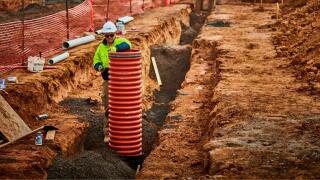
- Open trench - suitable for water mains, sewer, gas and general buried pipeline installation
- Horizontal directional drilling (HDD) - ideal for trenchless crossings beneath roads, waterways and existing infrastructure
- Pipe bursting - enables in-situ replacement of existing pipelines without open excavation
- Sliplining - rehabilitation of existing pipelines by insertion of a new PE liner
- Above-ground fixed installation - supported on brackets or pipe racks with allowance for thermal expansion and contraction
- Submarine and ocean outfall - suitable for below-water installations including marine and coastal applications
- Curved alignment - pipe can be cold-bent in the field to follow curved routes, with minimum bend radius dependent on SDR class
For full installation specifications including bedding requirements, support spacing, safe pulling loads and jointing procedures, download the Poliplex® PE100 Installation Guide or contact the Iplex Team today.
FAQ
Need help?
To speak with an Iplex sales & service team member