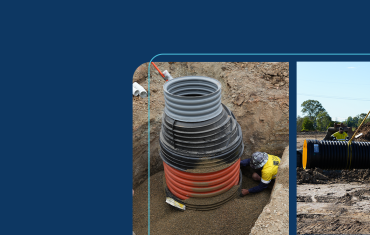

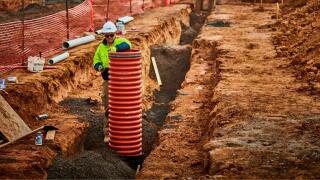
A NSW Sewerage Surcharge Project overcame the challenge of a strict 4-hour road closure window by utilizing the Iplex EziPit 1000 Maintenance Hole (MH). This innovative solution, backed by proven reliability and technical assessments, enabled rapid installation and road reopening.
Challenges
A 4-hour road occupancy licence ruled out the installation of a traditional cast in-situ concrete maintenance hole.
Proposed Solution
The EziPit was proposed due to its proven reliability in European roads for over 40 years, successful use in Sydney intersection since 2005, being WSAA appraised and widespread adoption in Australian municipalities.
Technical Assessments
Prior to construction, Iplex engineers collaborated with structural designers and the asset owner to address the technical performance of the EziPit in relation to meeting the project specifications.
Key considerations for the asset owner included:
1. Structural Integrity
Detailed calculations demonstrated the structural capacity at varying depths (1.5m, 3.5m, and 6m) with significant focus on lateral traffic loads at shallow installations.
2. Vehicular traffic loads
Calculations demonstrated structural capacity for the following load cases:
- Loads acting on the MH shaft due to heavy wheel loads adjacent to the unit (i.e. not acting directly on the MH)
- Forces imposed on the MH due to wheel loads on the ‘MH cover ring’ and its ability to distribute this load based on the soil’s bearing capacity adjacent to the shaft.
- Horizontal braking forces acting on the MH cover ‘top hat’ imposing a lateral load on the MH shaft.
- Other applicable loads/ actions, or combinations thereof.
3. Buoyancy
Calculations in accordance with AS1170.0 demonstrated that buoyancy forces were resisted for ‘a below ground structure’ exposed to ground water at the design level.
4. Performance
The EziPit can withstand maximum jetting pressure of 1200psi and resist hydrogen sulfide corrosion with its polypropylene construction and removable fibreglass ladder.
Additional queries were addressed to ensure installation success:
- Installation methods aligned with AS2566.2 standards to minimize failure risks from poor techniques or improper embedment material compaction.
- Provision of maintenance solutions based on European installation experience.
Implementation
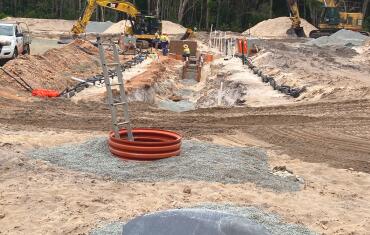
On the day of installation, the EziPit arrived at 4:30pm. The contractor completed its placement within the road that evening. The road was resealed and ready for peakhour traffic the next morning.
Conclusion
The EziPit MH demonstrated its practicality, quality and efficiency in overcoming project constraints with a cost effective solution.
DISCLAIMER: This case study is provided for information purposes only and is subject to this website's Term of Use. In particular, Iplex does not provide design or other professional services and this case study must not be relied upon as such. Before purchasing goods, always seek independent expert advice on the suitability of the goods for the intended purpose or their application.